Inside a Classroom Where AI Frees Teachers to Teach
A pilot program shows how AI can give teachers more time to teach, and what that means for students everywhere.
In any given classroom, a student has a question they don’t ask. A teacher has an idea they don’t have time to try. A lesson that could have gone differently, doesn’t.
It’s not for lack of effort. Teachers around the world work hard, but much of that work happens outside the classroom: lesson planning, creating materials, writing reports, building slides from scratch.
UNESCO estimates the world will need 44 million more teachers by 2030. But even the teachers we have are stretched, spending hours on tasks that keep them away from students.
What AI can do — and what it can’t
AI is not replacing a teacher. It can’t build a relationship with a struggling student, foster essential values, or cultivate critical thinking.
But it can take care of the groundwork, drafting lesson outlines in seconds, designing engaging class activities, generating interactive science simulations, and writing initial reports. Teacher can then refine the content with their unique experience and teaching style, rather than start from nothing.
That’s the idea behind the Penguin Teacher Assistant, developed by Tencent SSV Digital Education Lab, built on Hunyuan AI, trained on authoritative educational content — and piloted with more than 20,000 teachers across schools in China.
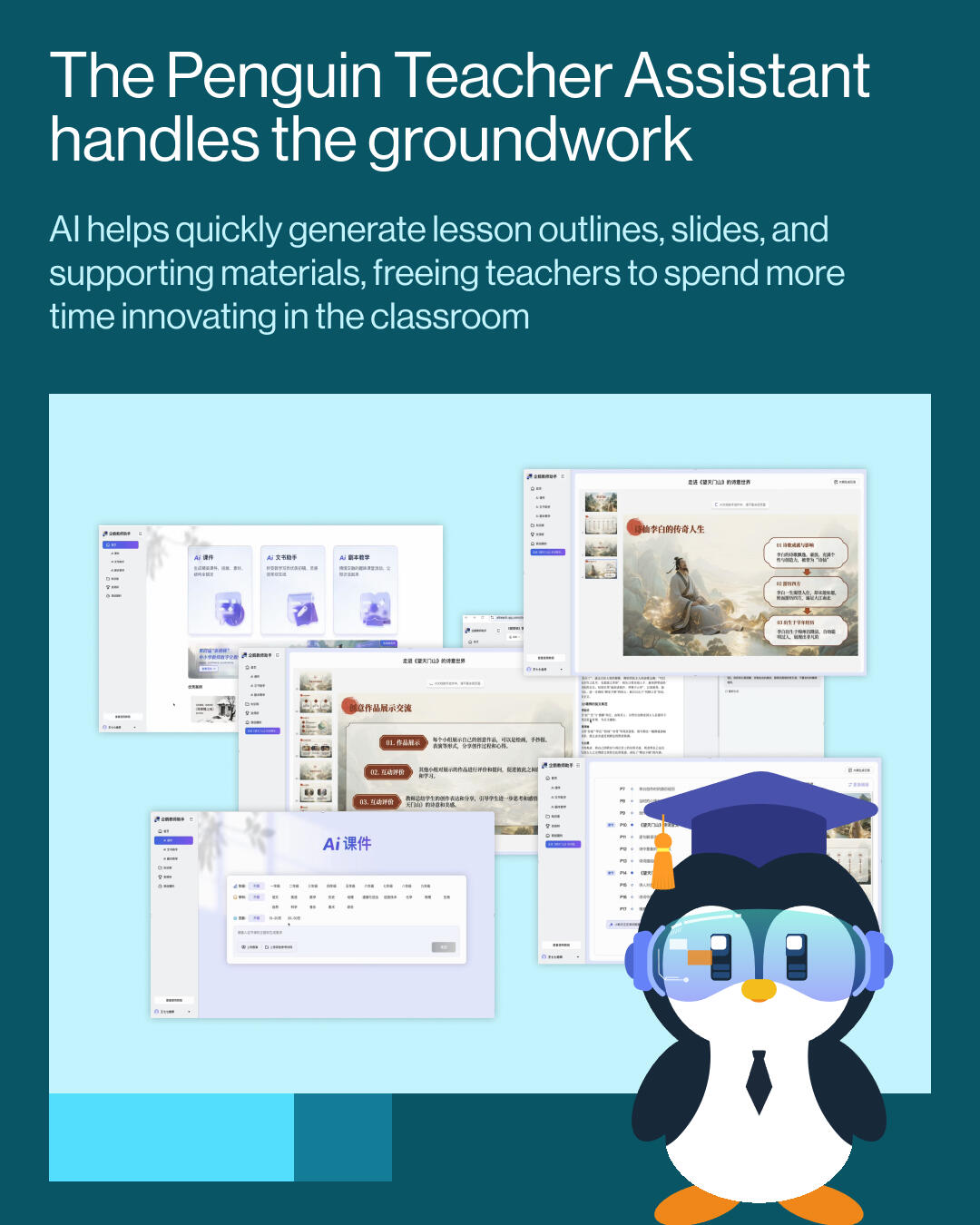
The approach is simple: keep teachers in control, and let AI do the support work.
“The AI handles the first draft. I focus on the learning experience,” says one teacher.
A teacher enters a topic — the water cycle, for example, or local wildlife — and swiftly receives a structured outline and draft slides. They adapt and make it their own.
Creative and scenario-based tools then suggest practical activities — group discussions, role-play, or simulations — helping students connect ideas to real life. Admin support reduces routine paperwork.
By facilitating a simple workflow — from lesson design to classroom delivery and post-class review — time is freed up for teachers to focus on exploring better ways to teach.
More time for teachers means more for students
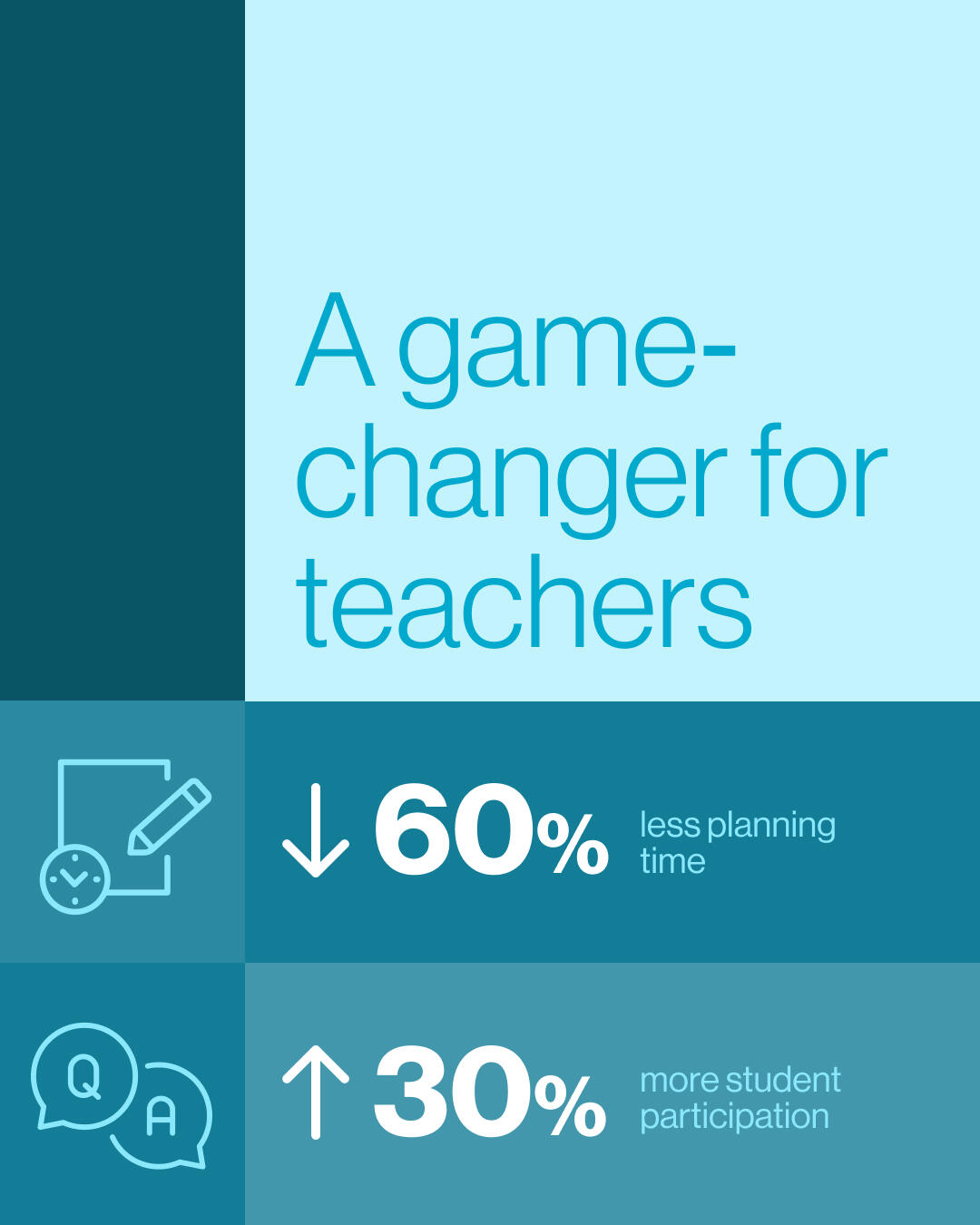
Teachers using the system reduced lesson planning time by over 60 percent, while student participation increased by more than 30 percent. But it’s what teachers report in the classroom that matters more.
“Even quiet students became more involved when we changed how the lesson was delivered.”
“Abstract concepts became visual and connected to real life. Students understood faster and with more confidence.”
“The classroom felt more alive. Students were more willing to raise their hands and share ideas.”
When teachers spend less time preparing, they spend more time noticing the unique needs of every student. It turns teaching from a “one-size-fits-all” lecture into a way to foster real personal growth.
Sharing good teaching — not just good tools
AI in education isn’t just about what it creates — it’s what it spreads.
In many schools, a teacher’s best work stays in that classroom. Elsewhere, another teacher starts again from scratch. The Penguin Teacher Assistant allows teachers to save and share their materials, turning individual effort into something others can build on.
A teacher in a remote area can start with the same quality of materials as one in a well-resourced school. Good teaching shouldn’t depend on where a school happens to be — and that’s the gap this kind of tool can help close.
More than improving individual lessons, AI can help raise the overall quality of teaching across education systems.
Built to work in real classrooms
Technology in education sometimes promises more than it delivers. Teachers adapt around tools rather than with them.
This program took a different approach. We co-created the tool with more than 650 teachers, refined through their feedback, and built around curriculum standards to ensure it was useful in practice.
Teachers kept using it because it was developed to meet their needs.
The lesson travels
The challenges this program addresses — too little time, unequal access to materials — are shared across classrooms worldwide.
What this pilot shows is that AI, used thoughtfully, can help close some of those gaps. Not by changing what teaching is, but by giving teachers more of what they need: time, creativity, and a stronger starting point.
When teachers have more space to focus on students, students feel it. More hands go up. More questions get asked. More of those quiet moments are noticed and acted on.
That’s not a technology story. It’s a teaching story, and it’s one worth telling everywhere.