How Design Is Saving Birds at Tencent’s New Headquarters
Window collisions kill billions of birds every year. It’s one of the most widespread yet avoidable causes of death for birds in cities. At Tencent’s new Headquarters Campus, we are doing something about it — with help from employees and the community.
Each autumn, birds travel thousands of kilometers along the East Asian-Australasian Flyway, a vast migratory corridor stretching from the Arctic to Australia. Dachan Bay wetlands in Shenzhen, home to Tencent’s Headquarters Campus, serves as a vital stopover on this route. It’s where migratory birds rest and refuel before continuing their journey south.
However, the migration and breeding seasons— especially in autumn—bring a hidden risk: bird collisions. Young birds are particularly vulnerable, as they navigate unfamiliar landscapes with limited flight experience. The bay also supports a diverse population of local resident birds. Ensuring the safety of all these species is a critical mission for us.
Which is why, when Tencent was designing its headquarters nearby, protecting that habitat was central to the brief.
Why birds keep flying into buildings
Birds evolved to read the physical world — trees, cliffs, open sky. Glass isn’t part of that vocabulary, and when a landscape is reflected in a window, it looks like the real thing. By the time the bird realizes otherwise, it’s too late.
In North America alone, it’s estimated up to a billion birds die from window collisions each year. It’s one of the biggest human-caused threats to wild bird populations worldwide. The good news: this problem has a ready solution.
Birds aren’t just wildlife — they’re part of how cities work
Birds are vital to ecosystems whether in cities or the countryside. They disperse seeds, keep insect populations in check, and act as early indicators of environmental health. A city that supports a healthy bird population is generally functioning well as an ecosystem. One that doesn’t is usually showing early signs of stress.
That’s the reason we launched the bird protection project.
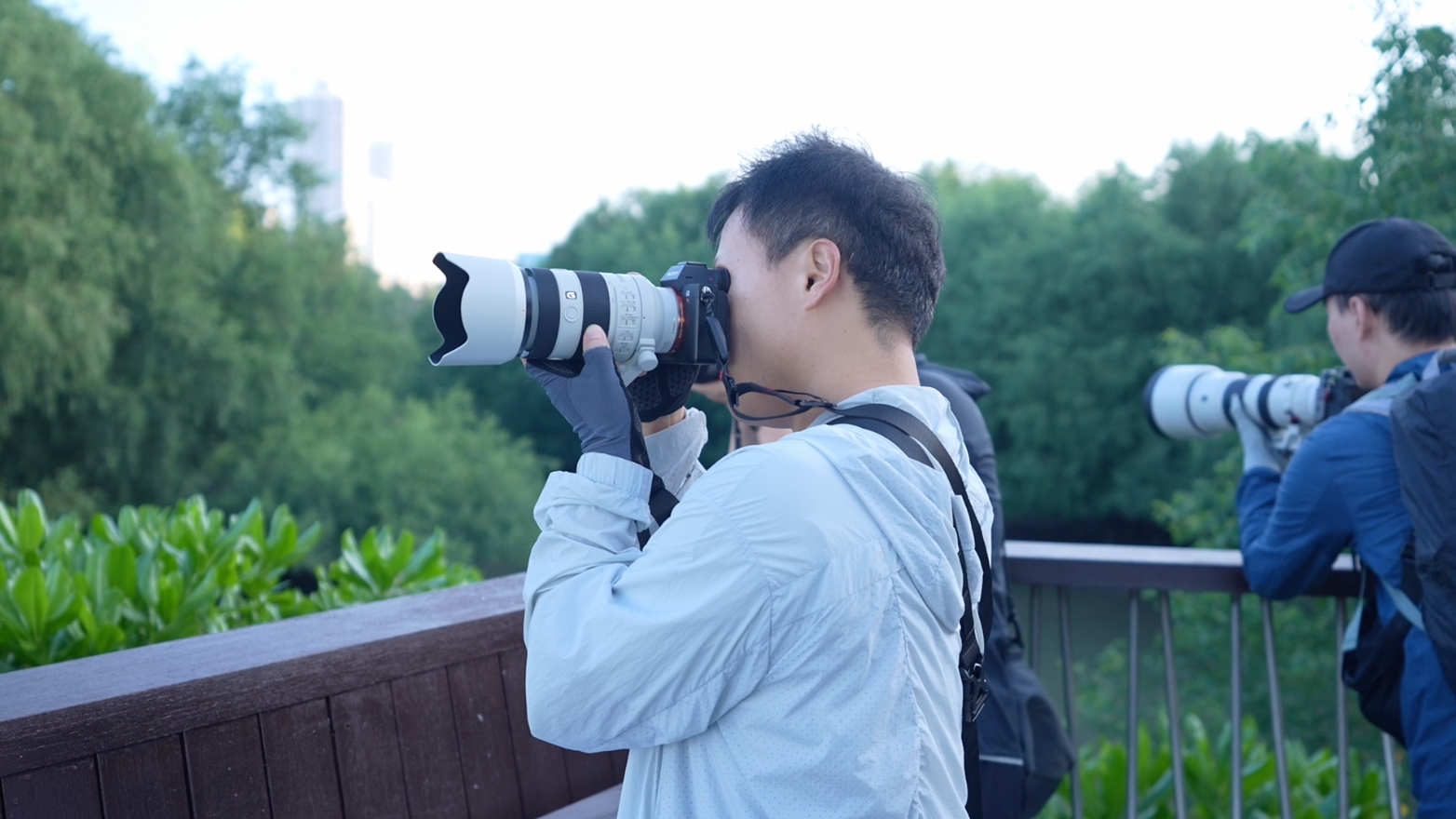 Tencent volunteers conduct on-site bird research in the Dachan Bay wetlands.
Small fixes, designed carefully
The starting point was careful observation: identifying where collisions were happening and understanding why. What became clear was that the problem wasn’t bird behavior — it was how the buildings were being perceived.
To address this, anti-collision dot film was applied to glass, which breaks up reflections enough for birds to detect it’s a barrier. The change is barely noticeable to anyone walking past, but can be life-saving for birds.
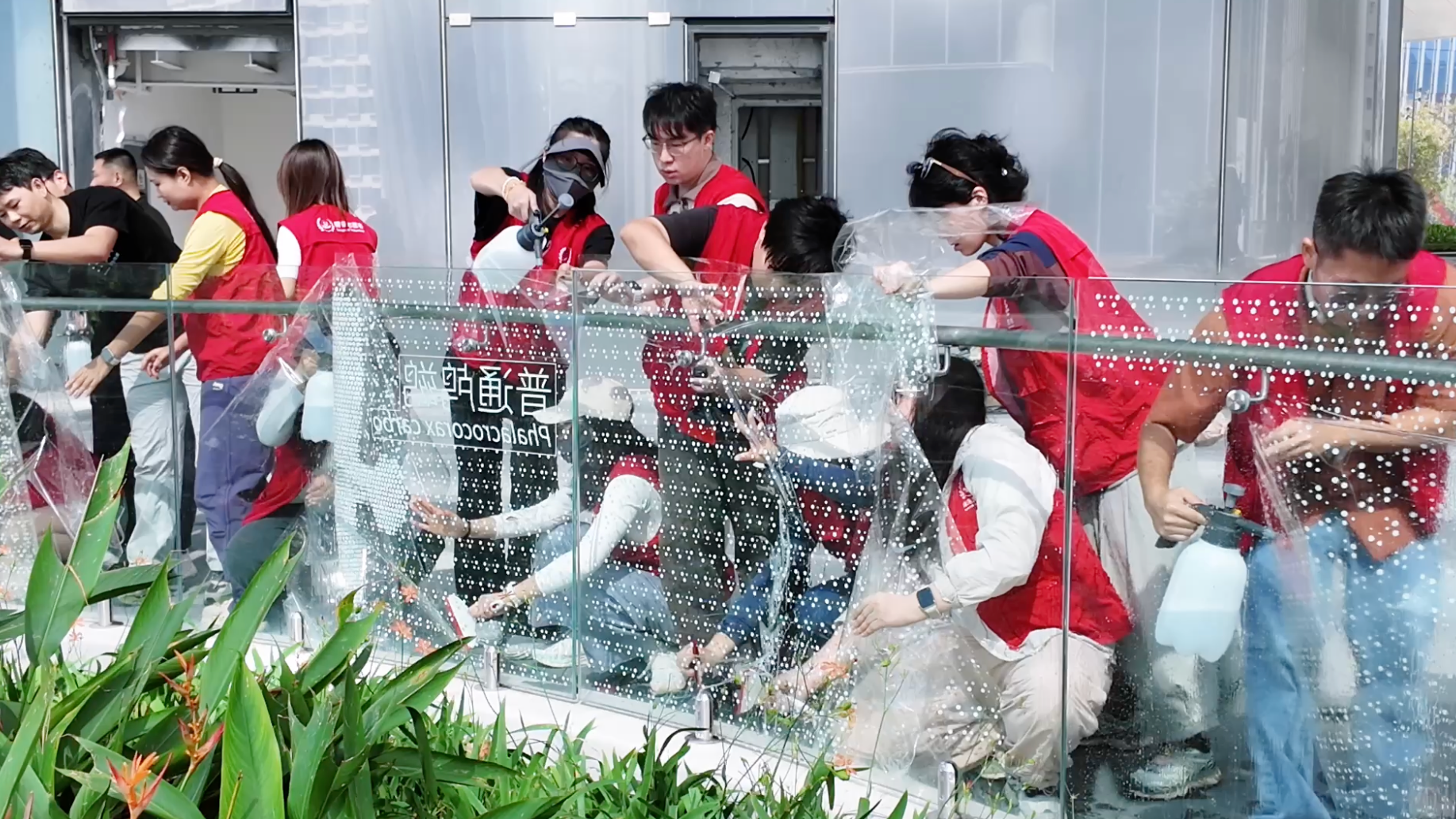 Tencent volunteers come together to apply anti-collision dot film at the Headquarters Campus.
Nest boxes were also installed in denser vegetation to provide safe nesting sites for birds to rest and breed. One nest box here was occupied within 24 hours of being installed.
From preventing fatal collisions to creating safe places, these efforts go beyond reducing risks—they help shape an environment where birds can live and thrive.
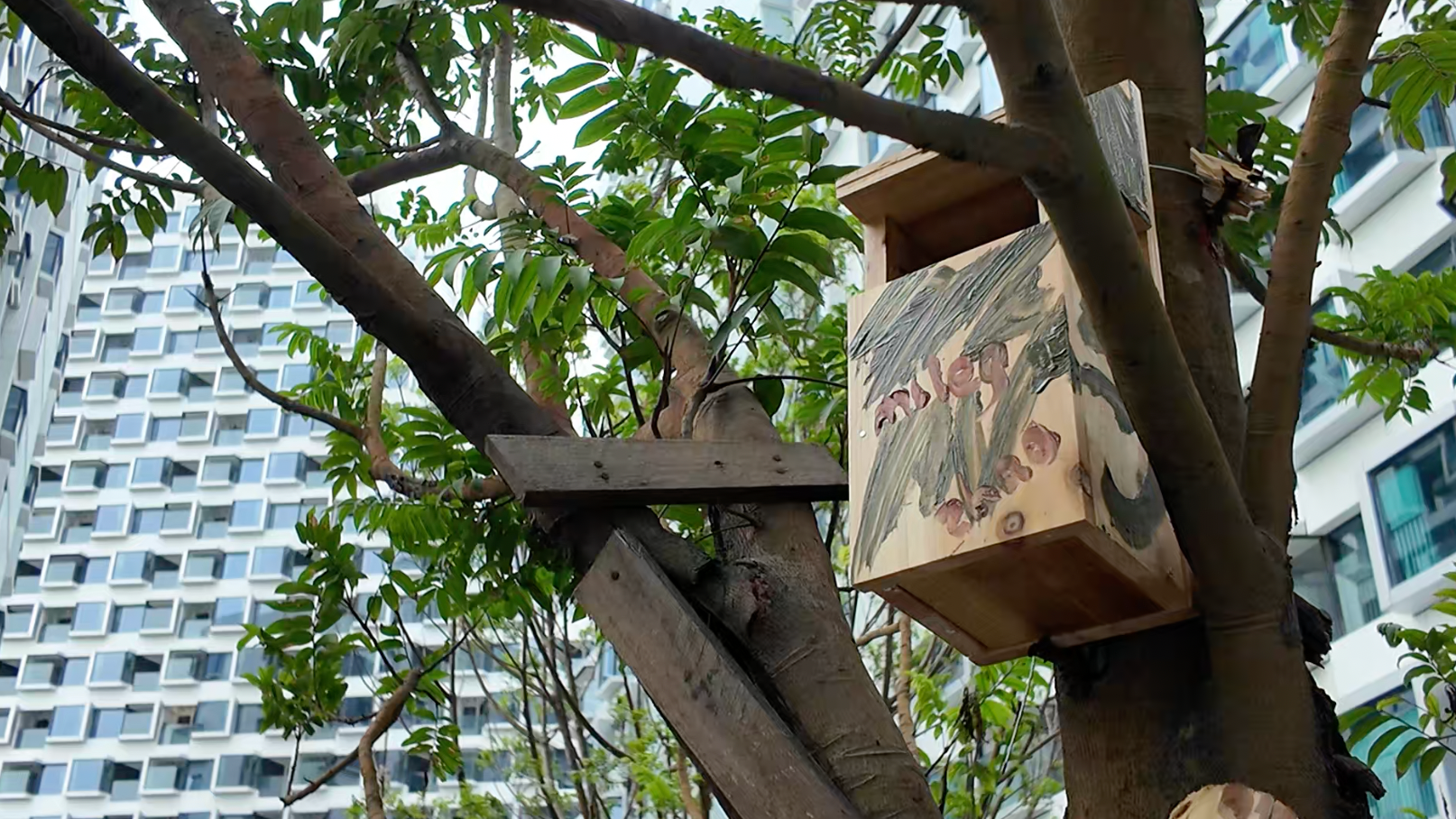 A nest box is installed in a tree, providing birds with a safe place to rest and breed.
Participation turns awareness into action
These ideas apply beyond a single site. Small, practical changes applied consistently can reduce harm and support biodiversity across cities. Design that takes bird behavior into account can be applied to any building, and the initiative has extended to other Tencent offices in Shenzhen, Beijing and Guangzhou.
Physical changes alone don’t scale on their own, however. People do. Employees, volunteers, and local communities have all played a part — fitting film on glass, assembling nest boxes, joining guided walks, and logging sightings through citizen science tools that help build a clearer picture of bird activity and risk.
Participation tends to make conservation feel less like someone else’s job — and the kind of awareness it builds is hard to switch off once it starts.
How you measure something that can’t fill in a form
Through ongoing monitoring led by employees, progress here shows up in the numbers — changes in bird collision rate, how quickly nest boxes are taken up, and which species return to the wetlands each year.
It’s a reminder that sustainability doesn’t always require advanced technology. It starts by recognizing a problem and fixing it with care. A well-designed building works well for the people inside it — and for the world around it.